10 Questions to Ask a Medical Device Development Partner

Choosing a medical device development partner is one of the highest-stakes decisions your R&D team will make. The right collaboration accelerates your path from concept to FDA clearance. The wrong one burns budget, delays timelines, and introduces risk you didn't plan for.
This article walks through the questions that matter most when you're evaluating an outsourced development partner. Whether you're scoping a Class II 510(k) submission or building a connected device from scratch, Intelligent Product Solutions (IPS) has worked through these exact challenges with medical device development partners across dozens of programs.
Below, you'll find 10 practical questions organized around engineering depth, regulatory fit, collaboration models, and the often-overlooked transition to manufacturing.
Key Takeaways to be answered with this Q&A
- Regulatory expertise in FDA cGMP, ISO 13485, IEC 62304, and ISO 14971 should be verified before any contract is signed.
- A partner's engineering depth across mechanical, electrical, systems architecture, embedded software and application software disciplines determines whether they can handle your full product scope.
- Collaboration models that embed the partner's engineers into your workflow reduce rework and speed up iteration cycles.
- Experience with true end-to-end device development from ideation and prototyping through design-for-manufacture and production files.
- Asking about post-development manufacturing support early prevents costly handoff gaps when you transition to volume production.
Essential Questions for Evaluating Medical Device Development Partners
1. What Regulatory Frameworks Does Your Team Follow Day-to-Day?
FDA cGMP (current Good Manufacturing Practice), ISO 13485 (quality management systems), IEC 62304 (software as a medical device) and ISO 14971 (risk management for medical devices) aren't optional checkboxes. They're the operating system your partner's engineers should be working inside every day.
Ask for specifics. Which standards has their team applied on recent projects? Can they show you a risk management file from a completed program? A partner fluent in these frameworks catches compliance issues during design, not after you've committed to tooling.
2. How Do You Handle Risk Assessment Throughout Development?
Risk management is only useful if it happens early and often. Ask your prospective partner how they apply ISO 14971 in practice, specifically which assessment methods they use: FMEA (Failure Mode and Effects Analysis), hazard analysis, fault tree analysis, or root cause analysis.
Intelligent Product Solutions build its risk management around ISO 14971, defining the risk elements to track throughout development and folding acceptance criteria into formal documentation from the start. That kind of rigor helps reduce surprises when it’s time for an FDA submission.
Just as important, the analysis documentation flows into system requirements and ultimately into the Acceptance Test Plan. That traceability matters, especially for regulated products, and it is far easier to maintain when it is built in from the beginning rather than stitched together later.
3. Can You Walk Me Through a Recent Medical Device Program Start to Finish?
Asking for a complete project narrative reveals more than a capabilities deck ever will. You want to hear about the messy middle: where requirements changed, where prototypes failed, and how the team adapted without blowing the timeline. You want to know that they can handle more than just the technical aspects of the work – that they are a genuine development partner.
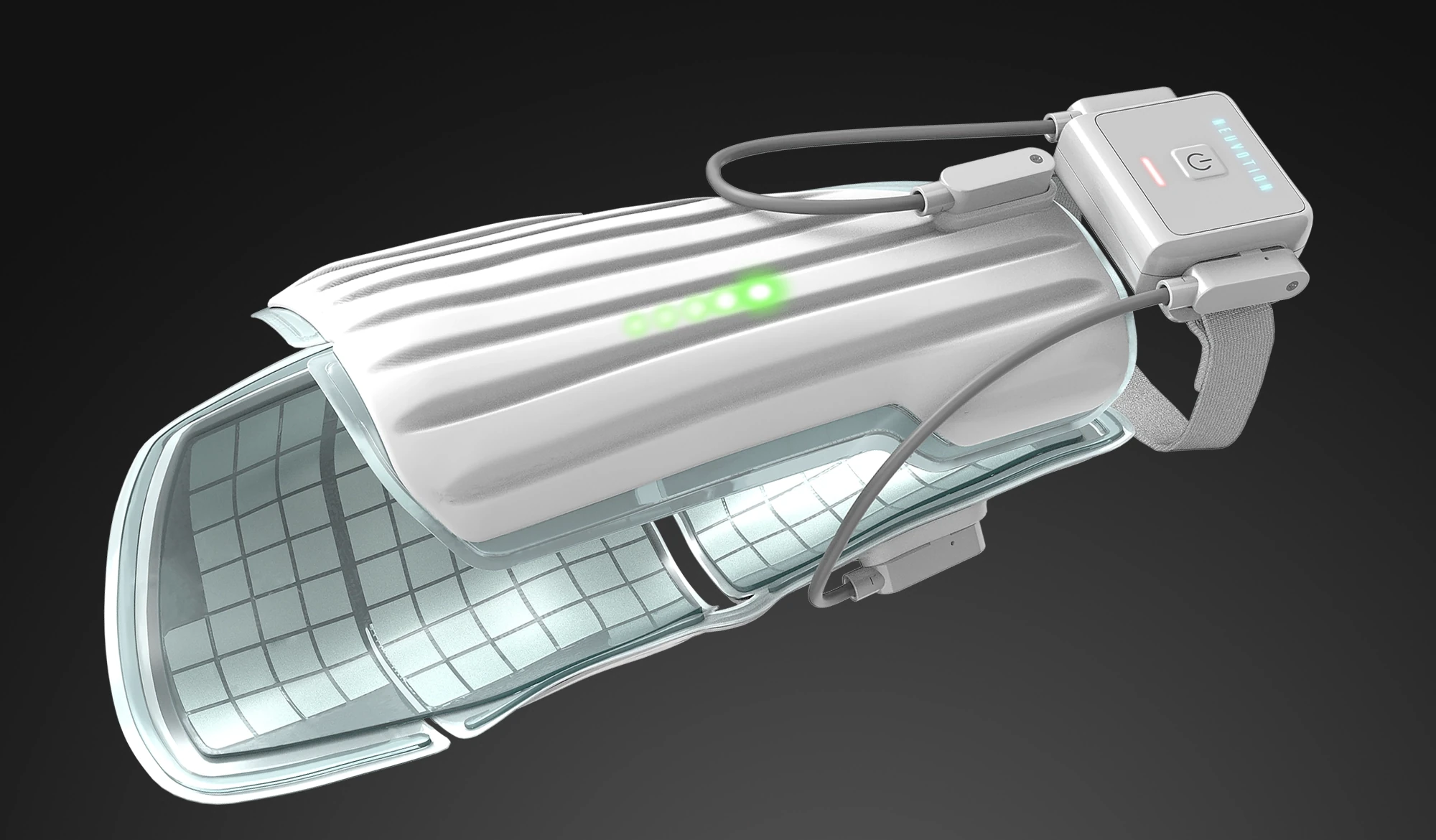
Take the NeuStim neuromodulation device, for example. This FDA-cleared device required precise coordination across electrical engineering, mechanical engineering, industrial design, embedded software, application software, and user-centered design. That kind of cross-discipline orchestration is what separates an average vendor from a genuine development partner.
4. What Disciplines Does Your Engineering Team Cover In-House?
Connected medical devices demand mechanical engineering, electrical engineering, embedded software, systems architecture, industrial design, and often cloud and mobile development. If your partner subcontracts half of those disciplines, you're managing multiple teams and the communication gaps between them.
Look for a firm with multidisciplinary capabilities under one roof. Intelligent Product Solutions keeps over 50 designers and engineers spanning hardware, software, and industrial design under a single management structure, so your project doesn't get passed between disconnected teams. Even if you’re only using one discipline from the IPS team you can be sure that one discipline has a direct sounding board from other disciplines seated a few cubicles away.
5. How Does Your Team Collaborate with Our Internal Engineers?
Some firms operate as black boxes: they take a spec, disappear, and return with a deliverable. Others embed directly into your workflow, participating in your sprint cadences, using your project management tools, and joining your standups.
The embedded collaboration model creates tighter feedback loops and reduces the cost of rework. When IPS engineers sit alongside your R&D staff, ambiguities in the spec get resolved in hours instead of days, and design iterations happen faster because the people making decisions are all in the same conversation.
6. What Does Your Design-for-Manufacture Process Look Like?
A beautiful prototype that can't be manufactured at scale is an expensive learning experience. Ask your partner how early they bring manufacturing considerations into the design process and who on their team owns the transition to production.
You want a partner who thinks about manufacturability, scalability, cost optimization, and long-term product viability from the first concept sketch. That's the difference between a prototype that works in the lab and a product that ships reliably at volume.
7. How Do You Manage Electronic Component Sourcing and Supply Chain Risk?
If the last few years taught the medical device industry anything, it's that supply chain disruptions are not rare events. They're recurring constraints you need to design around. Ask your partner what techniques they use to manage component obsolescence and shortages.
An experienced development partner will have strategies for qualifying alternate components early, designing flexible PCB layouts that accommodate multiple sourcing options, and monitoring electronic component availability across the program. That kind of foresight keeps your production schedule intact when a key semiconductor goes on allocation.
8. What Is Your Approach to Cybersecurity and Patient Data Protection?
Connected medical devices that transmit, store, or process patient data must meet HIPAA requirements and align with FDA cybersecurity guidance. This is not an afterthought you bolt on before submission. It's an architecture decision made at the start of development.
Ask how your partner integrates security considerations into hardware and software from day one. Threat modeling, encrypted data flows, and secure firmware update mechanisms should be baked into the design, not patched in during verification testing.
9. Can You Show Me How You've Helped a Company Similar to Ours?
A partner who has built devices in your therapeutic area (neuromodulation, patient monitoring, medication management, diagnostic equipment) will already understand the clinical workflows, user needs, and regulatory nuances specific to your market segment.
Intelligent Product Solutions has delivered connected health devices, wearable biofeedback systems, and FDA-cleared neuromodulation platforms. Reviewing case studies that match your device category gives you concrete evidence of how a partner performs under real program constraints.
10. What Happens After the Design Is Complete?
The gap between "design complete" and "product in production" is where many programs stall. Ask your partner who owns the preparation of production-ready files, how they support UL and FCC testing, and whether they stay engaged through first-article inspection and initial manufacturing runs.
A partner committed to the full lifecycle doesn't hand you a CAD file and wish you luck. They prepare production-ready documentation, support you through regulatory submission, and help manage the transfer to your contract manufacturer so nothing gets lost in translation.
How to Choose the Right Medical Device Development Partner for Your Team
No single question on this list will tell you whether a partner is the right fit. But the pattern of answers will. You're looking for technical depth, regulatory fluency, a collaboration style that matches your team's cadence, and real commitment to getting your device manufactured, not just designed.
Intelligent Product Solutions brings over 50 designers and engineers across mechanical, electrical, embedded and application software, and industrial design disciplines to every medical device engagement. From concept through FDA clearance and into production, IPS embeds in your development team to reduce risk and accelerate your path to market.
If you're starting a new medical device program or evaluating partners for your next product generation, reach out to start a conversation about what your project needs.